
Best Golf Simulator Hitting Mats: Complete Buying Guide
When you’re building a golf simulator, it’s easy to spend hours researching launch monitors, projectors, and screens. The hitting mat usually doesn’t get nearly as much attention—but it’s still a pretty important part of the setup.
After all, the mat is the one piece of equipment you interact with on every single swing. It affects how realistic your practice feels, how well you can tell when you’ve hit one fat, and how your wrists, elbows, and shoulders feel after a long session.
That said, the mat can also be a good place to save some money when you’re trying to get your simulator up and running. You don’t necessarily need to spend $1,000 on a premium mat right away. You do, however, want to research your options and find a quality mat within your budget—especially if you’ll be hitting from a hard garage or basement floor.
A hitting mat is also one of the easiest parts of your simulator to upgrade later. Start with something safe and reliable, then move to a more realistic or premium surface as your setup grows.
The good news is that choosing a mat is much more straightforward than choosing a launch monitor or projector. We’ll quickly cover the main types, explain what actually matters, and then get into our favorite options for different setups and budgets.
Why Your Golf Simulator Mat Matters
A good hitting mat needs to do more than protect your floor or clubs. It should give you useful feedback, hold up to repeated use, and let you practice without feeling beat up afterward.
Comfort and joint protection
If your simulator is in a garage or basement, you’re probably going to be hitting on concrete. A thin or overly firm mat won’t absorb much of the impact, which can become uncomfortable during longer practice sessions. This is especially important if you have a steep swing or tend to hit a lot of iron shots. You’ll start to feel it surprisingly quickly if you dont have a proper mat to hit off of.
Realistic feedback
Some cheaper mats allow the club to bounce off the surface and into the ball. That can make a fat shot look much better than it would on the course. A good mat should reward solid contact while still letting you know when you caught the ground first.
No mat will feel exactly like taking a divot from real grass, but the better options do a much better job of recreating that interaction.
If you want to use a simulator solely for entertainment & fun, this may not be an issue.
Ample space for a comfortable swing
Your mat should stay flat and in place while you swing. It should also provide enough room to stand comfortably without your feet hanging off the edge.
Ideally, your feet and the ball should be at the same height. This becomes especially important if you use a separate hitting strip or build the mat into a larger section of artificial turf.
The Main Types of Golf Simulator Mats
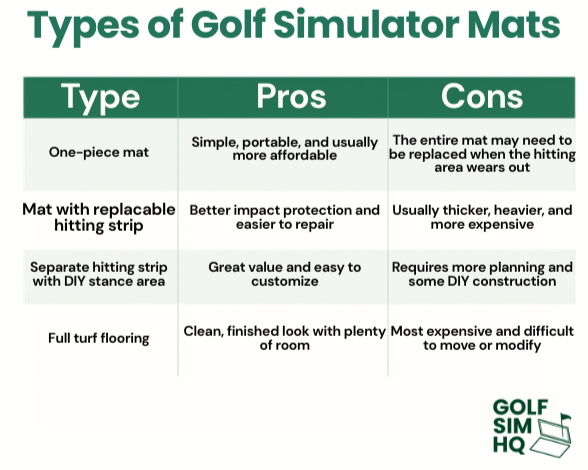
Most golf simulator mats fall into one of four categories. Each can work well—the right choice mostly comes down to your budget, available space, and whether your setup will be permanent or portable.
One-piece mats
A traditional one-piece mat is the easiest way to get started. Simply roll it out, place it in front of your screen or net, and start hitting.
These mats are usually the most affordable and portable option. The downside is that you’ll hit from the same small section repeatedly. Once that area wears out, you may need to replace the entire mat.
Mats with replaceable hitting strips
These mats combine a firm stance area with a softer, replaceable hitting section. The insert is designed to move or compress when the club strikes it, which can provide better feedback and reduce the shock from fat shots.
They cost more upfront, but you can replace the hitting strip without buying a completely new mat.
Separate hitting strips and DIY platforms
A separate hitting strip gives you the performance of a premium hitting surface without the cost of a full premium mat. You can install it alongside gym tiles, artificial turf, or another affordable stance surface.
This is often the best bang-for-your-buck option. Just make sure the stance area and hitting strip are securely installed at the same height.
Full turf flooring
A fully turfed simulator floor creates the cleanest and most finished look. It can cover the entire hitting area, allow the ball to roll back toward you, and may even provide a surface for putting.
This option works best in a permanent simulator room. It costs more, takes additional planning, and will usually still need a quality hitting strip built into the floor.
Recommendations
There isn’t one hitting mat that will be perfect for every golfer. Some prioritize realistic turf interaction, while others are more concerned with joint protection, portability, or keeping the total cost of their simulator down.
With that in mind, these are our favorite options for the most common types of setups:
Best Overall
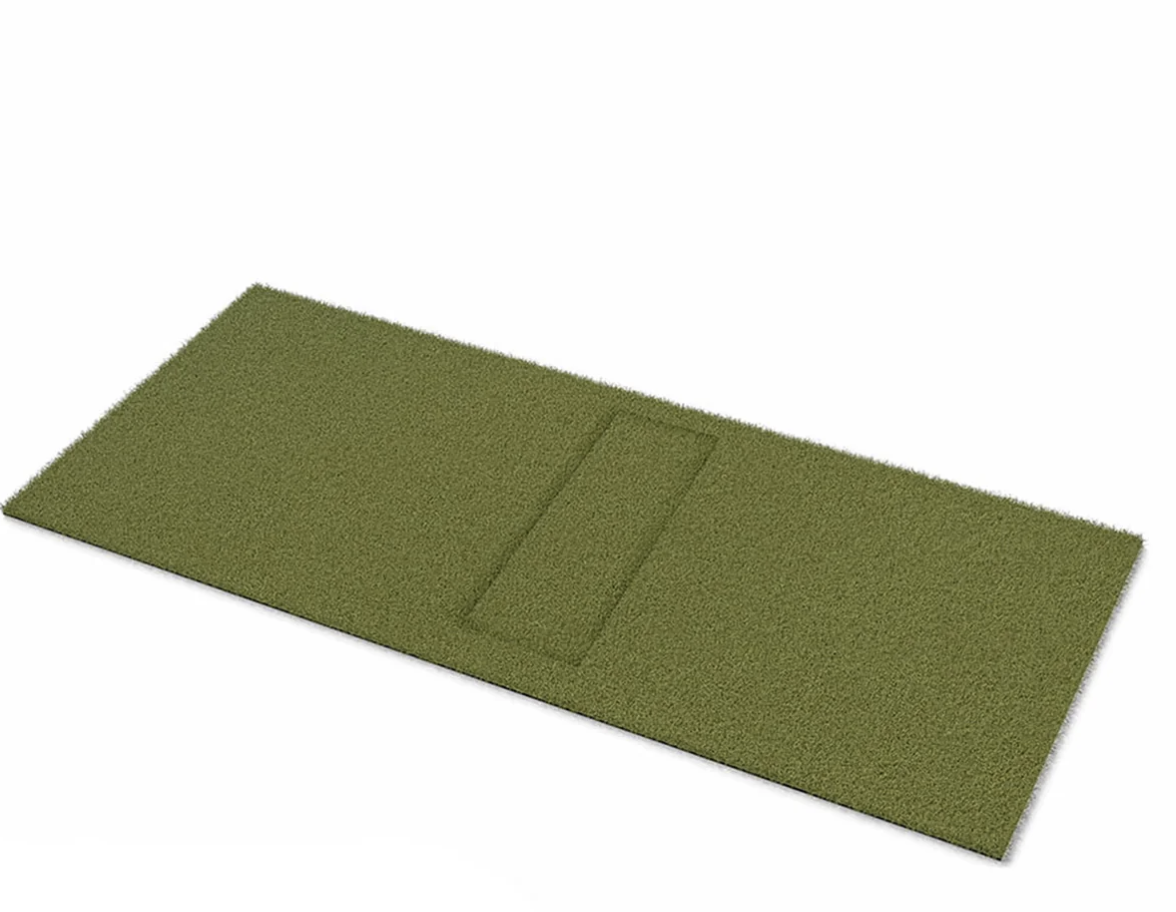
The HotShot checks just about every box for a home golf simulator. It can accommodate both righty & lefty golfers, uses a replaceable hitting strip, and lets you choose from different strip options depending on the level of forgiveness and feedback you prefer. Most importantly, it provides a great combination of realistic feel, useful strike feedback, and long-term durability.

Best Budget Mat
Full-size hitting and stance area at a very reasonable price. It’s simple, portable, and durable enough to get your simulator up and running without using a huge chunk of your budget. A great starter that you can always upgrade later.
Best traditional one-piece mat
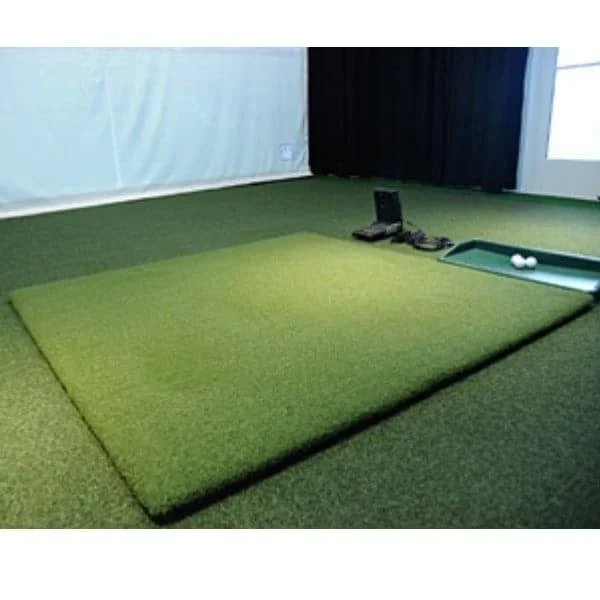
Combines a simple setup with a dense, realistic hitting surface. It accepts a real tee and gives you honest feedback on fat shots instead of letting the club bounce into the ball. A durable, straightforward option for golfers who value realistic turf interaction.
Best hitting strip for a DIY platform
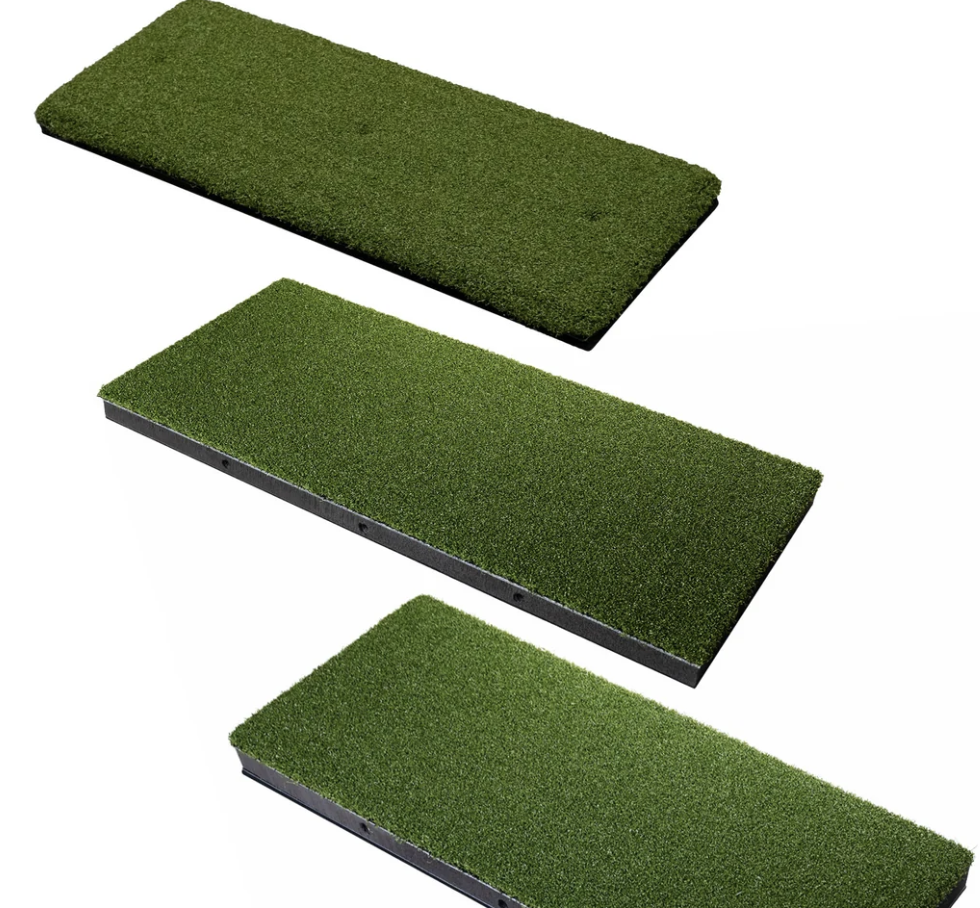
Carl’s Place HotShot Hitting Strip
Build a quality hitting surface without paying for an entire premium mat. You can choose between different strip styles depending on the level of forgiveness and feedback you want, then replace the strip if it wears out. A cost-effective way to build a custom hitting area around your space and budget.
You don’t necessarily need the most expensive mat on this list. A budget mat can be enough to get your simulator up and running, while a premium hitting strip offers an excellent middle ground for a DIY build.
Below, we’ll break down who each mat is best for, what it does well, and any drawbacks you should know about before buying.
How to Choose the Right Golf Simulator Mat
You don’t need to overcomplicate this decision. Start with your budget, think about how often you’ll use the simulator, and make sure the mat fits the way your space will actually work.
Here are the main things to consider.
Comfort versus realistic feedback
The best mats find a balance between protecting your body and giving you honest feedback.
A mat that is too firm can send a lot of impact into your wrists and elbows, especially when placed directly over concrete. On the other hand, an extremely soft mat may grab the club or make the ball feel like it is sitting up on a perfect lie.
If you have a steep swing, tend to hit the ground hard, or already deal with joint discomfort, lean toward a softer hitting area. If your main priority is improving your ball striking, look for a mat that prioritizes a realistic turf interaction, which will penalize fat shots and give you the feedback you need.
Full mat or hitting strip?
A full-size mat is the easiest option. You can roll it out, stand on it, and start hitting. Easy. This makes the most sense for portable setups or anyone who wants a simple finished solution.
A separate hitting strip in a DIY build takes more work to install, but it usually gives you the best value. You can combine a premium strip with less expensive turf or foam flooring for the stance area. When the hitting section eventually wears out, you only have to replace the strip.
For a permanent DIY simulator, this is often the route we would recommend.
Size and handedness
A 4-by-5-foot mat is generally enough for one golfer to stand and swing comfortably. Wider mats are useful if you want a centered hitting position or need the simulator to work for both right- and left-handed players.
Also consider where your launch monitor will sit. Some camera-based units may need to be placed on the mat so they remain level with the ball. If the mat is too small, the unit may sit on the floor below the hitting surface.
Mat thickness
Mat thickness matters more than most people realize. Premium mats and hitting strips can be more than two inches tall, while basic one-piece mats may be less than an inch.
Your feet, the ball, and any floor-mounted launch monitor should all be at approximately the same height. If you’re adding surrounding turf or building a platform, choose your hitting surface first and design the rest of the floor around its thickness.
Permanent or portable setup
If your simulator needs to share space with a car, home gym, or workshop, look for something that can be rolled up or moved without too much effort.
Modular mats with heavy rubber bases provide excellent stability, but they are better treated as permanent flooring. Weight matters much less in a dedicated simulator room than it does in a garage that needs to be cleared after every session.
Real tees versus rubber tees
Some mats allow you to push a normal wooden tee directly into the hitting surface. Others use a rubber tee holder or require a specialty indoor tee that sits on top of the mat.
This isn’t necessarily a deal-breaker, but it is worth checking—especially if you prefer using your normal tee at a specific height.
Durability and replaceable hitting sections
The hitting area will usually wear out long before the stance portion of the mat. If you expect to practice frequently, a replaceable hitting strip can save you money over time.
For occasional use, a quality one-piece mat may last for years. For daily practice or a simulator used by several golfers, we would strongly favor a mat with a replaceable hitting section.
Indoor or outdoor use
Finally, check whether the mat is designed to handle moisture, sunlight, and temperature changes. Some indoor mats use foam layers that should not be left outside or stored while wet.
If your setup will be outdoors—or even near an open garage door—look for materials specifically rated for indoor and outdoor use. A mat can perform great inside and still be a poor choice for permanent outdoor storage.
Frequently Asked Questions
What size golf simulator mat do I need?
A 4-by-5-foot mat is usually large enough for one golfer to stand and swing comfortably. A wider mat may be needed if you want a centered hitting position, regularly switch between right- and left-handed golfers, or need room for a launch monitor next to the ball..
Is an expensive golf mat worth it?
It can be—especially if you practice frequently. Premium mats generally provide better impact absorption, more realistic feedback, and replaceable hitting sections.
If you’re just trying to get your simulator running, starting with an affordable mat is completely reasonable. The mat is one of the easiest components to upgrade later.
Is a hitting strip better than a full mat?
A hitting strip usually offers the best performance for the money. You can invest in a premium hitting surface and use less expensive material for the stance area - but it will require a little bit of work to put things together.
A full mat is easier because it doesn’t require any construction. The better choice depends on whether you value convenience or customization.
Which golf mat is easiest on the joints?
Softer divot-action strips and the Fiberbuilt Grass Series are generally among the more joint-friendly choices. These surfaces allow the club to move through or compress into the hitting area instead of stopping abruptly.
No mat can guarantee that you won’t experience discomfort, so ease into longer practice sessions and stop if something begins to hurt.
Can I put a golf mat directly on concrete?
You can, but the mat needs enough padding and stability to handle repeated iron shots. A thin mat placed directly over concrete may feel harsh and can move during the swing.
Adding rubber gym tiles or another layer of supportive flooring underneath can improve both comfort and stability.
Can a golf mat hide fat shots?
Yes. Some firm mats allow the club to bounce off the surface and into the ball, producing a much better result than the same swing would create on grass.
A quality mat should still let the club move through the hitting area while giving you clear feedback when you strike the ground before the ball.
Do my feet and the ball need to be at the same height?
They should be as close to level as possible. Standing above or below the ball can affect your posture, setup, and swing.
This is especially important when installing a separate hitting strip. Build the stance platform to match the full height of the strip, including its turf, foam, and base layers.
Can I use a real tee with a golf simulator mat?
Some mats allow you to insert a normal wooden tee directly into the turf. Others use a built-in rubber tee holder or require an indoor tee that sits on top of the mat.
All three options work, but check the mat’s design before buying if using a real tee is important to you.
How long will a golf mat last?
That depends on the material, how often it is used, and whether you rotate the hitting position. A quality mat can last for years with casual use, but they will definitely wear out eventually if they are being used frequently.
A mat with a replaceable hitting strip is a smart choice for frequent use because you won’t need to replace the entire stance area.
What mat works best for right- and left-handed golfers?
Look for a wide mat with a centered hitting strip or build a full-width stance platform around a separate strip. A narrow mat with an offset hitting position may only work comfortably from one side.
Also confirm that the launch monitor can remain in the correct position when switching between golfers.
Final Thoughts
The hitting mat may not be the most exciting part of your golf simulator, but it has a major impact on how much you’ll actually enjoy using the setup.
For most dedicated simulators, the Carl’s Place HotShot is our favorite all-around option. It provides a strong combination of comfort, realistic feedback, and long-term value thanks to its replaceable hitting strip. Golfers who prioritize joint protection should also take a close look at the Fiberbuilt Grass Series, while those trying to get started on a smaller budget can do perfectly well with the GoSports Elite.
If you’re comfortable with a little DIY work, pairing a premium hitting strip with an affordable stance platform is probably the best bang for your buck.
You don’t need to buy your forever mat on day one. Choose something safe, stable, and reliable within your current budget. You can always upgrade the hitting surface—or the entire floor—as your simulator grows.
